A Type C Schengen visa is a short-stay visa that allows eligible travellers to visit the Schengen Area for up to 90 days within any 180-day period. It is also known as a short-stay visa or Uniform Schengen Visa (USV).
A Type C visa can be issued for permitted short-stay purposes such as tourism, visiting family or friends, business trips, attending events, or certain short courses.
The Schengen Area currently consists of 29 European countries that generally allow travel between participating countries without routine internal border checks. The Schengen Area is not the same as the European Union (EU), as some EU countries are not part of Schengen, while some Schengen countries are not EU members.
It is also important to distinguish visa validity from allowed duration of stay. Visa validity indicates the period during which you may use the visa, while the allowed stay indicates how long you can remain in the Schengen Area.
Type A vs. Type C vs. Type D Schengen Visa: What’s the Difference?
Feature |
Type A Schengen Visa |
Type C Schengen Visa |
Type D National Visa |
| Purpose | Airport transit | Short visits | Long-term stay |
| Main use | Transit through a Schengen airport | Tourism, business, family visits | Work, study, or family reunification |
| Schengen entry | No | Yes | Yes, mainly in the issuing country |
| Maximum stay | Transit period only | Up to 90 days in any 180-day period | Usually more than 90 days |
| Travel within Schengen | No | Yes | Yes, usually up to 90 days in any 180-day period |
| Can you leave the airport? | No | Yes | Yes |
| Where to apply | Transit country | Main destination country | Destination country |
| Key difference | For airport transit only | For short stays | For long-term stays |
Single-Entry vs. Double-Entry vs. Multiple-Entry Type C Visa
Type A, Type C, and Type D describe the purpose and duration of a visa, while single-entry, double-entry, and multiple-entry describe how many times you can enter the Schengen Area and its member countries.
Feature |
Single-Entry Type C Visa |
Double-Entry Type C Visa |
Multiple-Entry Type C Visa |
| What does it mean? | Allows you to enter the Schengen Area once. | Allows you to enter the Schengen Area twice. | Allows you to enter the Schengen Area multiple times during validity. |
| Number of entries | 1 entry | 2 entries | Multiple entries |
| Leaving the Schengen Area | Ending your stay burns the visa; you cannot re-enter. | You can leave and return once more. | You can leave and re-enter multiple times while valid. |
| Visit multiple Schengen countries? | Yes, during your single continuous stay. | Yes, during either authorized stay. | Yes, during any of your authorized visits. |
| How entries are consumed | First entry uses your only access. Leaving terminates the visa. | Uses 1 entry on initial arrival and 1 entry on second arrival. | Each separate border crossing into Schengen counts as 1 entry. |
| Maximum stay | Up to 90 days in any 180-day period (or days granted). | Up to 90 days total in any 180-day period (or days granted). | Up to 90 days total in any 180-day period. |
| Visa validity | Covers the specific trip or approved window. | Covers a set window accommodating two trips. | Ranges from short-term up to several years. |
| Best for | A single continuous trip to Europe. | A trip requiring a temporary exit (e.g., visiting the UK) and re-entry. | Frequent travel to the Schengen Area. |
| Example itinerary | Saudi Arabia → France → Italy → Saudi Arabia | Saudi Arabia → France → UK → France → Saudi Arabia | Saudi Arabia → France → Saudi Arabia → Germany → Saudi Arabia |
| Re-entering after entries are used? | No. Must apply for a new visa. | No. Must apply for a new visa. | No. No further entries permitted once expired or total stay days are used. |
| Important rule to remember | Single entry still allows travel between multiple Schengen nations on one trip. | Double entry does not mean two separate 90-day stays. | Multiple entry does not mean unlimited stay; 90/180-day rule still applies. |
Reminder: The number of entries and the number of days you can stay are two different things. For example, a multiple-entry Type C visa may allow you to enter the Schengen Area several times, but you must still follow the authorised stay and the 90 days in any 180-day period rule.
Next, let’s look at the requirements you need to meet when applying for a Schengen visa from Saudi Arabia. Let’s explore them in detail.
Type C Schengen Visa Requirements and Documents
- Valid passport
Submit a valid passport with enough validity for your trip. It should generally have at least two blank pages for the visa and entry stamps. You may also need to provide copies of previous passports or visas, if requested. - Completed visa application form
Fill out the Schengen visa application form correctly. Make sure the information matches your passport and supporting documents. Sign the form where required. - Recent passport-size photographs
Provide recent photographs that meet the Schengen visa photo requirements. The photo should be clear and show your face properly against a suitable background. - Saudi residence permit (Iqama)
If you are applying from Saudi Arabia as a resident, provide a valid copy of your Iqama. It should cover the relevant period of your travel and visa application. - Proof of legal residence in Saudi Arabia
Show that you legally live in Saudi Arabia. This may include your residence permit and other documents requested by the relevant visa authority. - Travel itinerary
Provide details of your planned trip. This can include your intended travel dates, destinations, cities you plan to visit, and the countries you will enter. - Flight reservation or return ticket
Provide a flight reservation showing your planned departure from Saudi Arabia and your return or onward travel. Check the consulate’s instructions before purchasing a non-refundable ticket. - Proof of accommodation
Provide hotel bookings for your stay. If you will stay with family or friends, you may need an invitation letter and proof of accommodation from your host. - Travel medical insurance
Provide travel medical insurance that meets the Schengen requirements. It should cover the Schengen Area and the full period of your stay. The policy should provide at least €30,000 in medical coverage, including emergency medical care and repatriation. - Proof of sufficient funds
Show that you can financially support yourself during your trip. The consulate may consider your bank balance, regular income, length of stay, accommodation costs, and other financial commitments. - Recent bank statements
Submit recent bank statements for the period requested by the relevant embassy or consulate. The statements should clearly show your name, account activity, income, and available balance. Avoid unexplained large deposits before your application. - Employment certificate
If you are employed, provide an employment letter or salary certificate. It should normally include your job title, salary, employment start date, and other relevant employment details. - Proof of ties to Saudi Arabia
You may need to show why you are likely to return to Saudi Arabia after your trip. Employment, business ownership, family responsibilities, studies, and other relevant commitments can help demonstrate your ties.
Note: The exact document checklist can vary depending on your nationality, Saudi residence status, travel purpose, destination country, and the consulate handling your application. The embassy, consulate, or authorised visa application centre may also request additional documents: see our Schengen visa from Saudi Arabia page or connect with our visa consultants for personalised help.
How to Apply for a Type C Short Stay Visa Step-by-Step
The application process can vary slightly between Schengen countries. However, most applicants follow these general steps.
Step 1: Identify the correct Schengen country
First, determine which Schengen country you should apply to. If you are visiting only one country, you normally apply through that country’s embassy, consulate, or authorised visa application centre.
If you plan to visit several Schengen countries, you generally apply through the country where you will spend the most time. If you plan to spend an equal number of days in different countries, other rules may apply.
Step 2: Check eligibility and requirements
Check whether you need a Type C Schengen visa based on your nationality and Saudi residence status. Then check the requirements of the specific Schengen country you plan to visit.
Review the required documents, visa fee, appointment process, and other instructions before starting your application.
Step 3: Complete the visa application form
Complete the Schengen visa application form with accurate information. Make sure your details match your passport and other supporting documents.
Do not leave required sections incomplete. Check the form carefully before signing it.
Step 4: Prepare your supporting documents
Collect all the documents required for your application. These may include your passport, Saudi residence permit, photographs, travel itinerary, accommodation proof, travel insurance, bank statements, employment documents, and other supporting documents.
Arrange the documents according to the checklist provided by the relevant embassy, consulate, or visa application centre.
Step 5: Book a visa appointment
Book an appointment through the official visa application centre or other authorised channel used by the relevant Schengen country in Saudi Arabia.
Choose the correct location and service before booking. Appointment procedures can differ between countries.
Step 6: Attend the appointment
Attend your appointment on the scheduled date. Submit your documents and provide your fingerprints and photograph if required.
Some applicants may also need to attend a visa interview. The authorities may ask questions about the purpose of the trip, travel plans, employment, finances, and other details.
Step 7: Pay the visa fee and service charges
Pay the applicable Schengen visa fee and any additional service charges required by the visa application centre.
Check the current fee before submitting your application because visa fees and service charges can change.
Step 8: Submit the application
Submit your completed application form and supporting documents. Make sure you provide all required documents before the application is forwarded for processing.
The visa authorities may request additional documents or information if needed.
Step 9: Track your application
After submission, you may be able to track your application online using the reference number provided by the visa application centre.
Processing times can vary. Avoid making non-refundable travel arrangements based only on an expected processing time.
Step 10: Receive and check the visa decision
Once a decision is made, collect your passport or receive it through the available delivery service, if offered.
If your visa is approved, check the visa sticker carefully. Confirm your name, passport number, visa validity dates, number of entries, and the authorised number of days.
If the visa is refused, read the refusal letter carefully to understand the reason for the decision and whether you can reapply or appeal under the applicable rules.
Which Embassy or Consulate Should You Apply To?
When applying for a short stay visa from Saudi Arabia, you normally submit your application through the authorised visa application centre appointed by the Schengen country you are applying to.
The centre may collect your application form, supporting documents, biometric data, and applicable fees before sending the application to the relevant embassy or consulate for a decision.
The application centre you need to use depends on the Schengen country and your place of residence in Saudi Arabia. Make sure you check the official instructions before booking your appointment.
If you are looking for experienced visa assistance in Saudi Arabia, get in touch with The Visa Guy. Our team can help you understand the requirements, prepare your documents, and guide you through the application process.
Why Is a Type C Schengen Visa Refused? Common Reasons Explained
A Type C Schengen visa can be refused for different reasons. The visa authorities check your documents, finances, travel plans, and overall application before making a decision.
- Insufficient or unclear financial evidence
You need to show that you can afford your trip. Low funds, unclear income, or unusual transactions can raise concerns. - Weak travel purpose
Clearly explain why you want to travel. Your itinerary and supporting documents should support the purpose of your trip. - Inconsistent information
Make sure all the information in your application and documents matches. Differences in your travel dates, employment details, finances, or other information can create doubts. - Inadequate supporting documents
Missing or incomplete documents can weaken your application. Follow the document checklist provided by the relevant embassy or visa application centre. - Insufficient evidence of intention to leave
You need to show that you plan to leave the Schengen Area before your visa or permitted stay ends. Employment, family, business, or other commitments can help show your ties to your country of residence. - Invalid or inadequate travel insurance
Your travel insurance must meet the Schengen requirements. An invalid policy or insufficient coverage can lead to refusal. - Unclear accommodation or itinerary
Provide clear details about where you will stay and what you plan to do during your trip. Your bookings and itinerary should match the information in your application. - Previous immigration or visa issues
Previous visa refusals, overstays, or immigration problems can affect a new application. Be honest about your travel and visa history. - Doubts about the purpose or conditions of your stay
The authorities may refuse your visa if they are not satisfied that your planned trip is genuine or that you will follow the visa conditions.
Applying for a Type C Visa : What You Need to Know
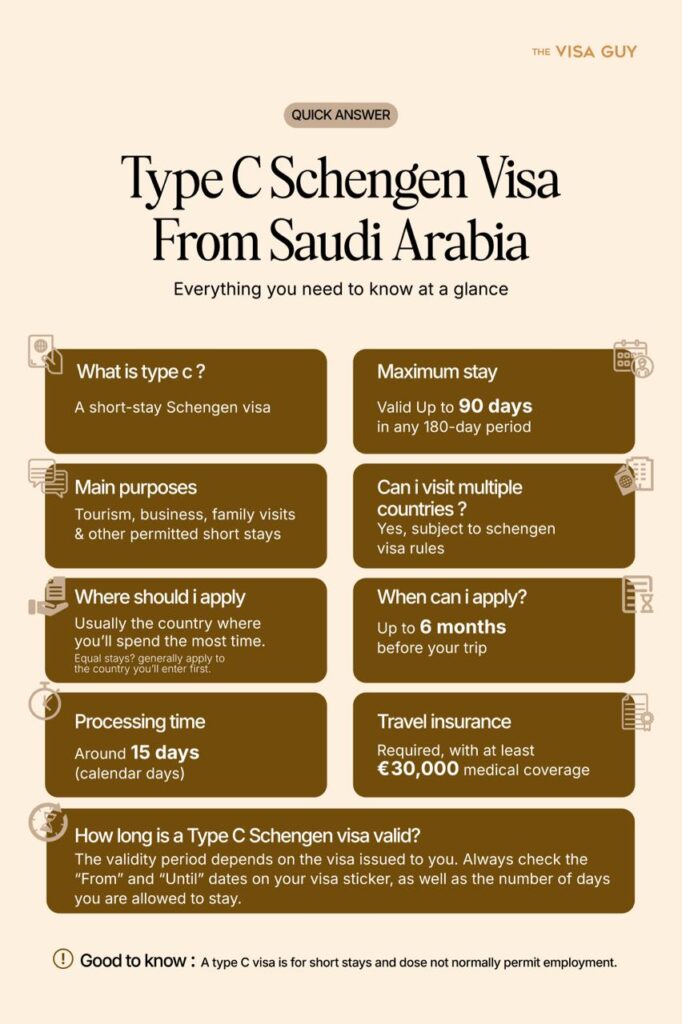
A Type C Schengen visa allows you to travel to the Schengen Area, which currently includes 29 countries, for purposes such as tourism, visiting family, or other permitted short stays.
If you are planning to apply for a Type C visa from Saudi Arabia, you should understand the eligibility requirements and the documents you need to submit.
Visa requirements can change, so it is important to check the latest information before applying.
You can also contact a trusted visa service such as The Visa Guy for guidance with your application.
Their Schengen visa consultants in Saudi Arabia can help you understand the requirements, prepare your documents, and navigate the application process. They can support you throughout the process until you receive a decision on your visa application.
Frequently Asked Questions
- Can I extend my Type C Schengen visa?
In limited situations, you may be able to extend a Type C Schengen visa. You normally need a serious and valid reason, such as force majeure, humanitarian reasons, or other exceptional circumstances. - Can I visit multiple Schengen countries with a Type C visa ?
Yes. When you are applying for a Type C Schengen visa from KSA, it allows you to travel to multiple Schengen countries during your permitted stay. You must follow the visa conditions and the 90/180-day rule. - How do I choose the correct Schengen country to apply through?
Apply through the country where you plan to spend the most time. If you plan to spend an equal number of days in several countries, apply through the country you will enter first. - Is ETIAS required to enter Europe in 2026?
ETIAS is expected to start in the last quarter of 2026. It will apply to visa-exempt travellers, not travellers who need a Schengen visa. - What is the Schengen 90/180-day rule?
The rule allows short-stay visa holders to stay in the Schengen Area for up to 90 days in any 180-day period. You must count your Schengen stays carefully, including stays under previous visits. - What happens if my Schengen visa is rejected?
You will receive a refusal decision explaining the reason for the rejection. Depending on the country and applicable rules, you may be able to appeal or submit a new application after addressing the issues. - Can I convert a Type C visa into a longer-stay visa?
You generally cannot simply convert a Type C visa into a long-stay visa while you are in the Schengen Area. If you want to stay longer for work, study, or another long-term purpose, you normally need to apply for the appropriate national visa. - Can I work in the Schengen Area on a Type C visa obtained from Saudi Arabia?
No. A standard Type C visa does not normally give you the right to work. You need the appropriate work authorisation or national visa for employment. - When should I apply for a Type C visa?
You can normally apply up to six months before your planned trip. Apply early enough to allow time for processing, additional documents, or delays. - What does a Type C Schengen visa not permit?
A Type C visa does not normally allow long-term residence or regular employment. You must also follow the purpose, dates, number of entries, and other conditions stated on your visa. - Do children from Saudi Arabia need a separate Schengen Type C visa?
Yes. Children generally need their own Schengen visa if they are not visa-exempt. Parents or legal guardians may also need to provide additional documents for minors. - Do I need travel insurance for a Schengen Type C visa?
Yes. Applicants normally need travel medical insurance that meets Schengen requirements. The policy must cover the required medical expenses and the full period of the planned stay. - Does having a Schengen Type C visa guarantee entry into Europe?
No. A visa allows you to travel to a Schengen border, but it does not guarantee entry. Border authorities can check your documents and travel purpose before allowing you to enter. - How long is a Type C Schengen visa valid?
The validity period depends on the visa issued to you. Always check the “From” and “Until” dates on your visa sticker, as well as the number of days you are allowed to stay. - How long does a Type C visa take to process?
A standard Schengen visa application usually takes around 15 calendar days to process. In some cases, the authorities may need more time and can extend the processing period.