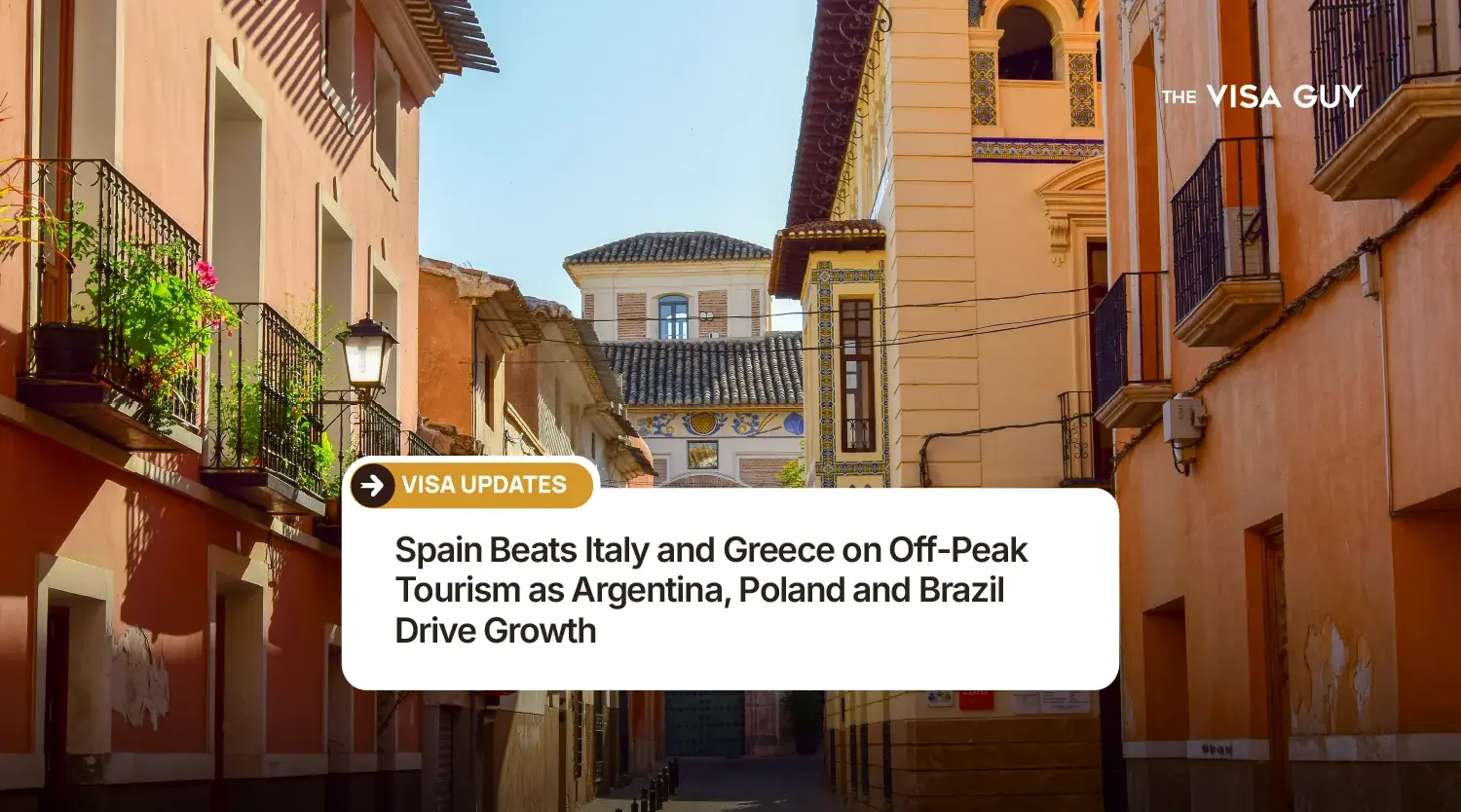
Spain has a more even spread of tourism across the year than its Mediterranean rivals, according to findings presented in Zaragoza on October 20, 2026. Only 52.8% of Spanish tourism activity falls between May and September, leaving 47.2% outside the peak season. In Italy, 58.7% falls in the high season, and in Greece 72.7%. This reflects a better seasonal balance, not higher total arrivals than Italy or Greece.
Off-peak demand is increasingly supported by Argentina (up 27.8% over three years), Poland (18.6%) and Brazil (13.1%). Cultural tourism remains the strongest motivation for shoulder and low-season travel, while family, wellness and outdoor travel are growing fastest. Premium hotels are also gaining ground. Mid-to-high-end and high-end properties account for 44.2% of stays on the Mediterranean coast and islands, 58.2% in the Canary Islands, and 64.8% of international urban hotel demand.
By region, shopping is one of the fastest-growing motivations in Spanish cities, up 4.7 percentage points in two years. Inland Spain draws solo travellers, with 39.4% of German and 33.5% of US visitors travelling alone. Mediterranean coast visitors stay an average of 3.7 nights, while the Canary Islands lead with 6.6 nights, alongside growing family and wellness travel.